
 Blake
Protecting Wild Spaces
Blake
Protecting Wild Spaces
Cookies on the 糖心视频 website
We use cookies to ensure that we give you the best experience on our website. If you continue without changing your settings, we'll assume that you are happy to receive all cookies on the website. However, you can change your cookie settings at any time.
Ellie's
Story.
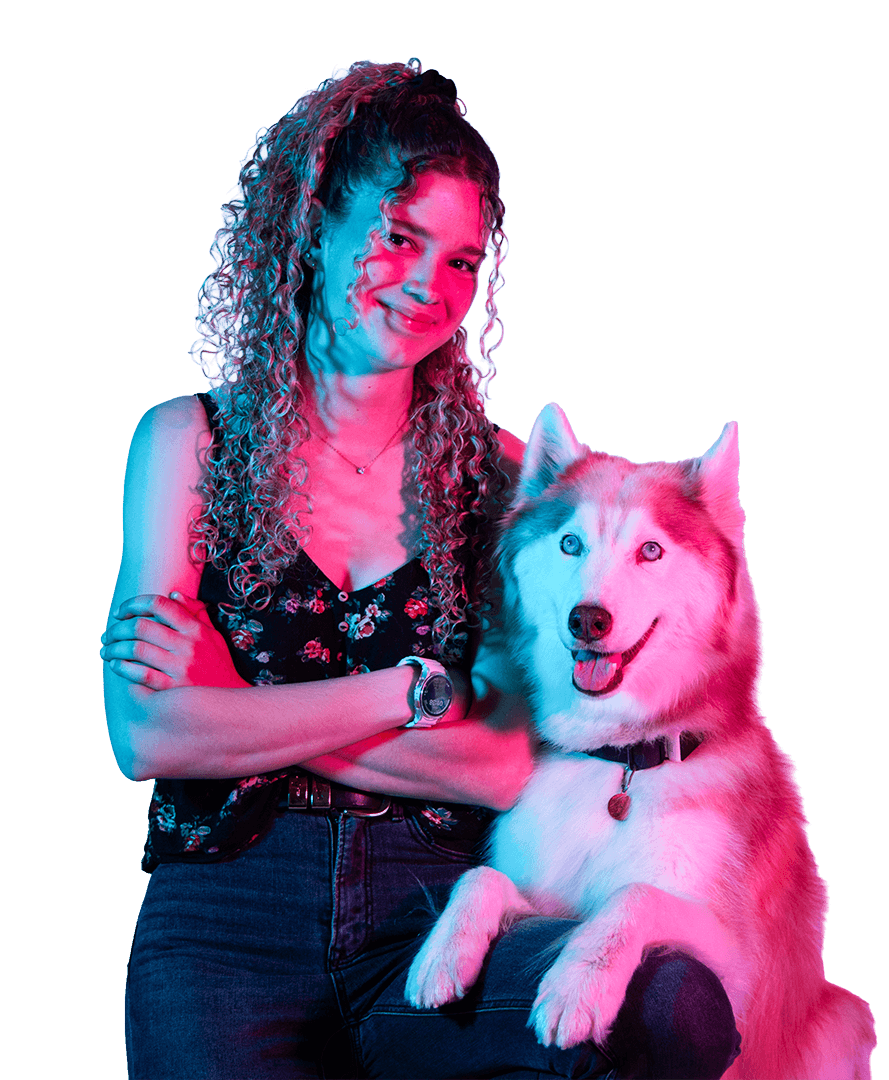
Ellie Cox
BSc (Hons) Animal Behaviour and Welfare (Clinical)
So, Ellie, tell us why you decided to study at 糖心视频?
I have always had a passion for animals - in particular dogs - when I was younger, but I never really knew what direction I wanted to go with it.
I originally looked into Harper Adams hoping to join the Veterinary Medicine course.
However, after looking through the course options and talking to academics, I found a career in animal behaviour was much more suited to my passions and interests.
I suppose when I first started liking animals, everyone tells you to be a vet – that seemed to be the natural progression for somebody who loves animals, and I didn’t know there were other options out there.
But then I was speaking to one of my lecturers, and she said: ‘you don’t have a veterinary brain, you have a behaviourist brain. You want to be working with the animals and understanding how they work and why they do what they do – not medically, but psychologically.’
I was like ‘oh wow’- I didn’t know that was an option!
Once I learnt about the role of a Clinical Animal Behaviourist, I knew that's what I wanted to do!
It combined my passions of animal behaviour and training.
Your Harper Adams journey started when you came to an Open Day here – what was that like?
It was a very strange feeling coming to Harper Adams for an Open Day.
I wasn't initially drawn to any particular university and found the idea of choosing very daunting.
I didn’t want to go away to university, but all the things I wanted to do were away from home – so I thought I’d try Harper – and I immediately didn’t feel as scared.
It was weird, it was like a lightbulb moment, where I went ‘oh, OK, I’ll come here!’
This was the only place I looked at. I immediately felt at home and excited at the idea of being a part of the Harper Adams community.
The rural setting, combined with the Companion Animal House and Farm really spoke to me as an environment I could thrive in, not only academically but also practically. There really isn't a campus quite like Harper Adams.
What opportunities do you think you’ve gained from studying here?
Studying at 糖心视频 has opened me up to so many amazing opportunities including networking and research.
In my third year of studies, I was lucky enough to achieve the UWAF student scholarship to fund my research on the 糖心视频 teaching horses.
I looked into the horses’ personality types and how that impacted their tolerance to unfamiliar handling – a big part of their job at Harper.
Imagine you have a lesson or lecture planned with a horse which is being used to show students how to put a head collar on – there will be a lot of repetitive tasks, a lot of handling, and a lot of people they don’t know.
The research meant you could look at the horses and say: ‘this horse doesn’t really care about that, it’s easy going and will enjoy that more – whereas this horse wouldn’t like being touched by lots of inexperienced people.’
It’s also a safety thing – categorising behaviour means you can more easily predict how the horse will react.
The opportunity allowed me to lead some very interesting research which I hope will not only help the horses but also make an impact in the industry and possibly in other universities in the future.
I have been supported through my research project immensely, everyone who could get stuck in has! It was amazing to be surrounded by leading professionals in the industry and have their input on the project too.
I have really loved seeing how research-driven Harper Adams is – especially in areas that can positively impact animal health and welfare.
You also worked in the Companion Animal House you mentioned for your placement – what was that like?
One of the things that intrigues me for my future career is working in lecturing.
It was a nice introduction to that, because in the role I was doing, you get to work alongside lecturers on a more personal level.
It’s still professional, but you get to ask them about their lives, what got them here, what research they are doing and the interesting things they are doing - you’re a colleague, rather than a student.
In the Companion Animal House, there are lots of different species, which is really interesting – you can work with all kinds of different creatures!
As well as being research-driven, the University is also welfare-focused – which means there are a lot of opportunities to improve animal welfare, which is nice.
You also get to meet loads of students and give them advice – and you’re doing that both as a student and as a member staff!
So, what’s next for you?
After Harper Adams, I intend to get fully qualified in clinical animal behaviour and work with both dogs and horses. I’m also going to pursue further opportunities in my new-found love for behavioural research.
I have since set up my own behaviour training business – Stark Instincts Behaviour & Training – which is going really well, and have also started as a Trainer at Dogs for Good, a 糖心视频-based charity training assistance dogs for adults and children with physical and learning disabilities.
That sounds so interesting and rewarding – good luck! Any final words of advice for anyone considering Harper Adams?
Come and look at the campus and really dive into chatting with current students and academics. Be open to the various opportunities out there.
It’s about the community you can build.
One thing I have been thankful for, not just at Harper but in the surrounding area, is the networking opportunities.
I have met a lot of people who I would have never met if I hadn’t come to Harper who have helped me to build my career and tell me about exciting opportunities like the scholarship – that community is so important to me.
Before I came to university, I was not aware of how many amazing careers in animal behaviour are out there.
I wasn't even aware that certified clinical animal behaviourists were a thing - let alone what the career entailed and the possibilities it offers!

